Quarantine Station
From the 1870s, quarantine regulations were introduced in an attempt to prevent travellers bringing infectious diseases into New Zealand. People who were infected, or were suspected of being infected, were housed in quarantine stations until it was clear they were free of disease.
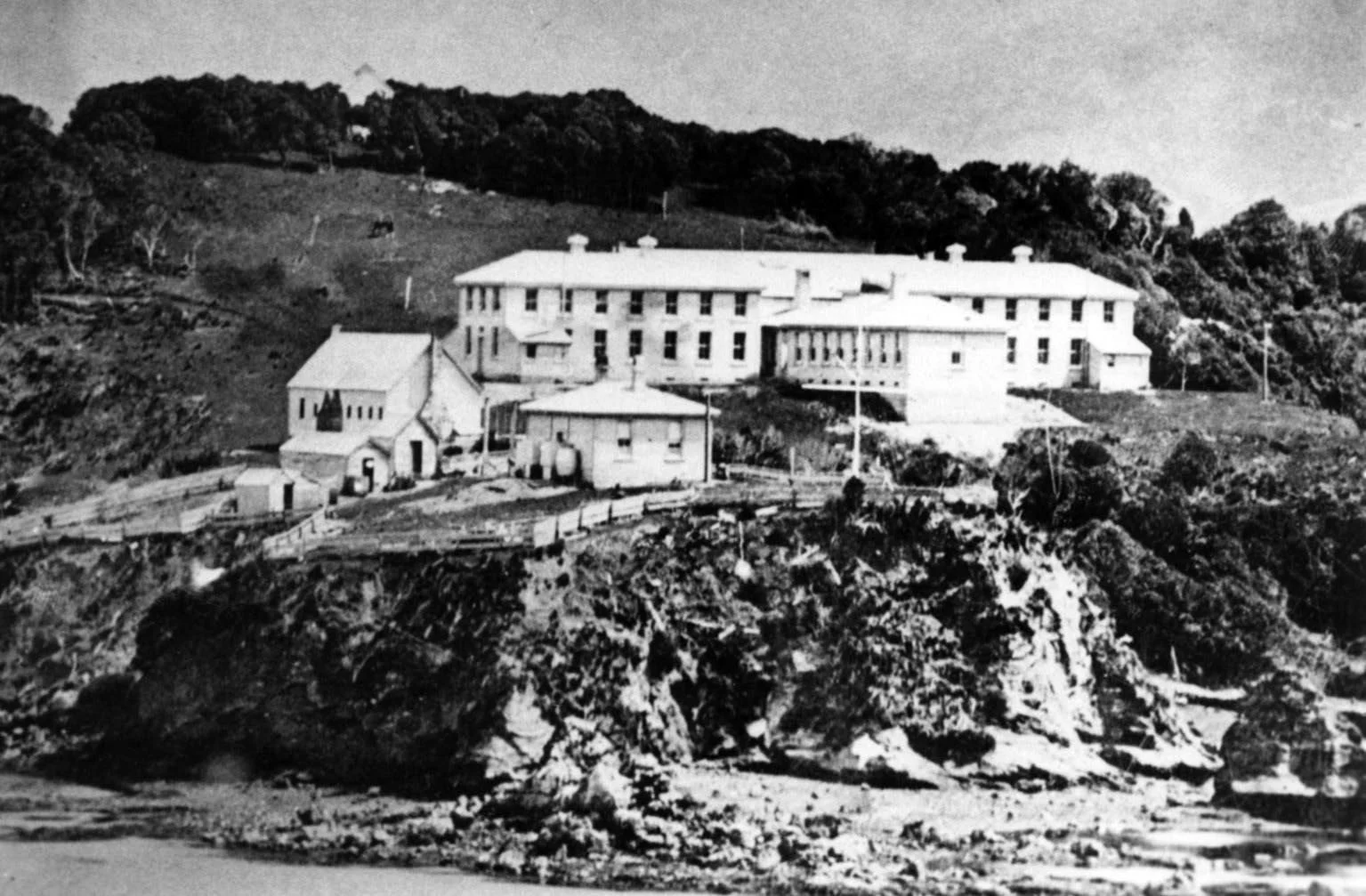
The first Quarantine station was built on the island in 1861 but not used until 1863. It was closed in 1924. There were two main quarantine periods (the 1870s and WW1). The major buildings were completed in 1873. A description of the facilities on the Island was published in June 1874. We have partially restored part of this large group of buildings, the ‘Married Quarters’.
The building represents an important part of Otago’s and New Zealand’s history and is one of only two 19th century, offshore Quarantine station dormitory buildings remaining in New Zealand.
Here is a photo of the Quarantine Station (built 1873) as it looked in about 1900.
Immigration Period – 1861 to 1915
From the 1860s, New Zealand established island-based quarantine stations near major ports to isolate arrivals with infectious human diseases or imported livestock carrying exotic agricultural pests. These stations operated through the 19th and mid-20th centuries before being phased out in favour of mainland transitional facilities and modern public health control.
Notable people in quarantine on the Kamautaurua included, Brogdenites (come to build Otago’s railways), Celestials (Chinese workers come to dig for gold) as well as Polish refugees. The last ship from this period was quarantined in 1902, but the Dougall family maintained the station until 1924.
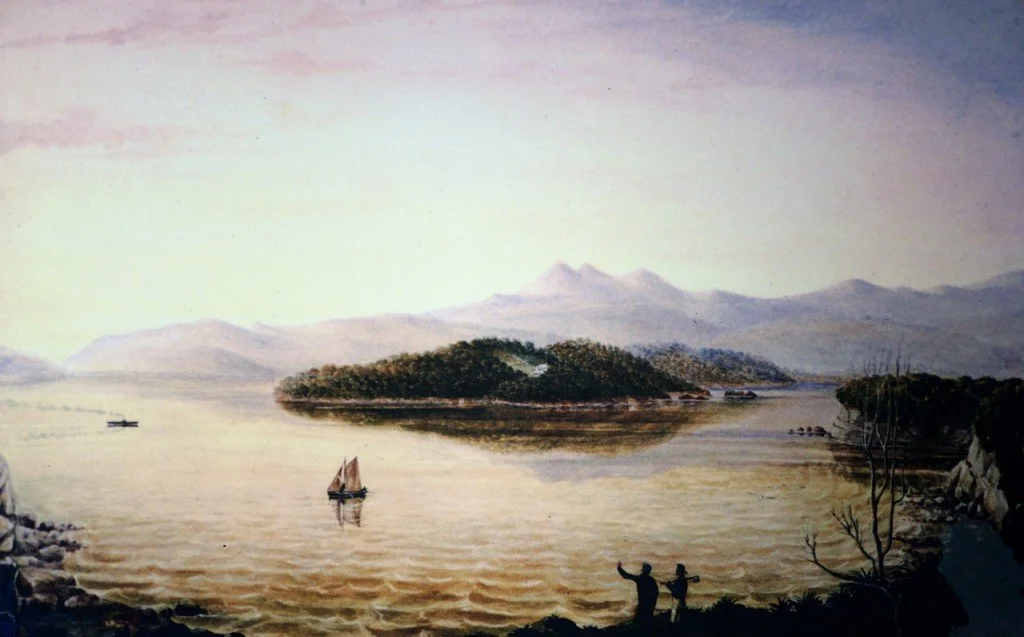
The first two buildings were built in clearings in the bush in 1861 (see painting to the left). Watercolour by William Handcock, 1864. Hocken Pictorials
Quarantine and Death
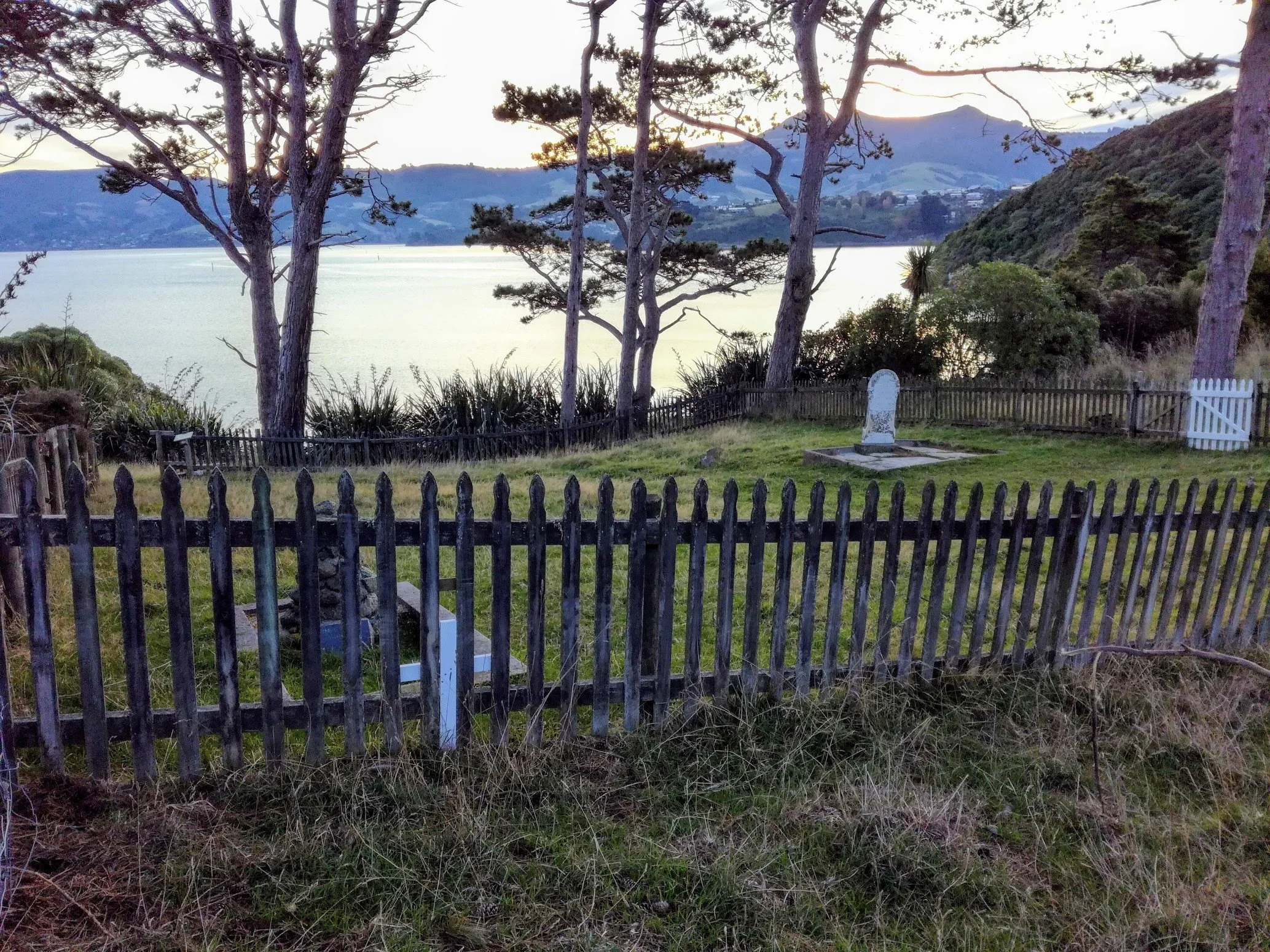
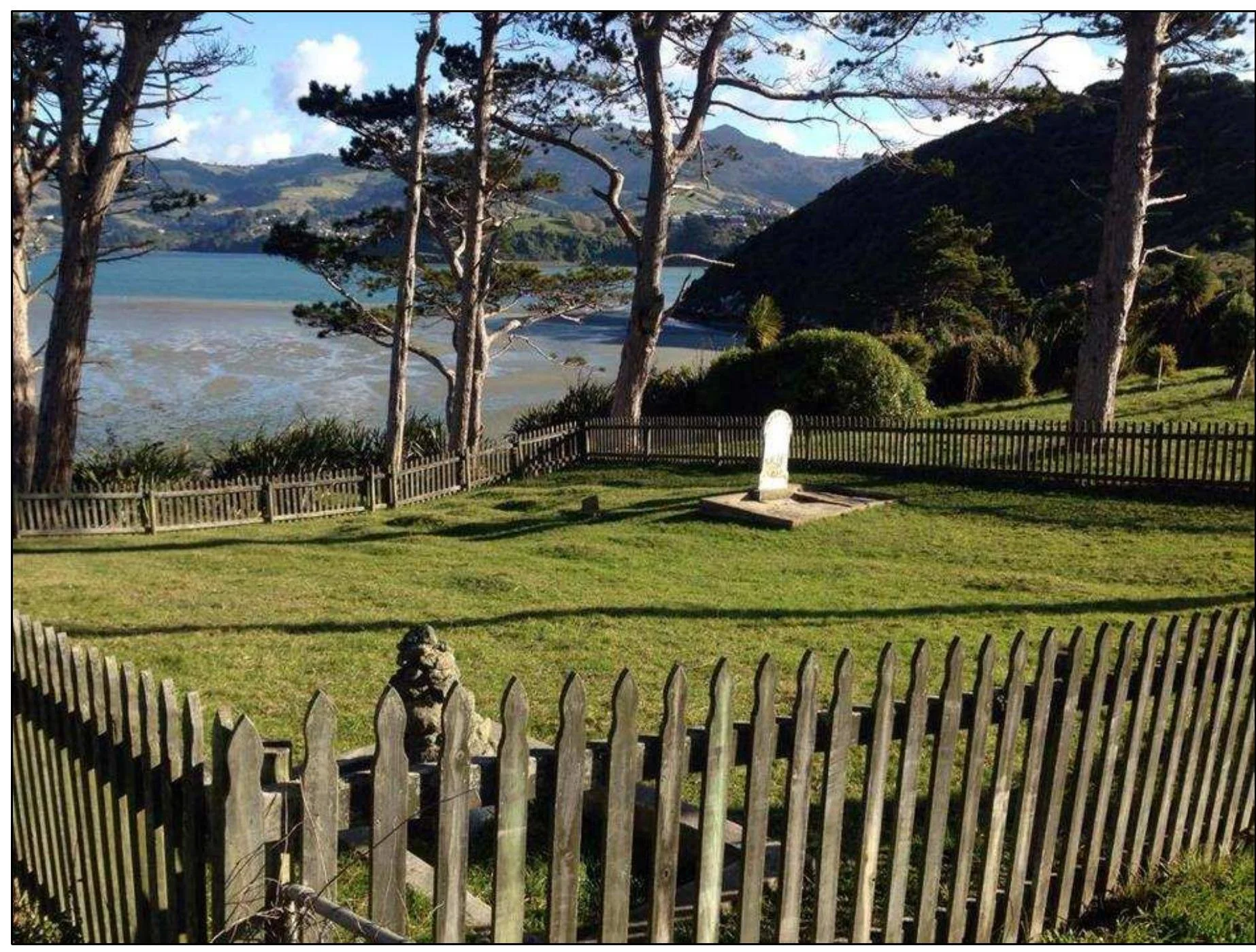
It was the first ‘home’ in New Zealand for many settlers who arrived during the late 19th century on ships that were quarantined due to illness on board, and is also a tangible reminder of the souls who died while here in quarantine, who are buried on the island. It and other remnants of the Quarantine station can be visited.
A PDF list of burials, ships and causes of death is available here.
NOTES:
Fuller entries, compiled by June McDougall, NZSG, are in Fiche No.386 of the N.Z.Society of Genealogists’ master microfiche of cemeteries, 1985 (held in most N.Z. research centres).
Original entries are in the Port Chalmers Post Office Register of Deaths. Only 45 names were included in that Register. Information about another 17 burials has been gathered from newspapers and family informants. All of these sources, when checked against one another and passenger lists, contain some proven inaccuracies. Details for No.3 were added later from a family gravestone in the Clarendon cemetery, Otago.
There have been 72 burials at the Island, two of them (Nos. 41 & 62) later reburied elsewhere. That total of 72 was given by Will Dougall, son of Keeper John Dougall, in a letter to the Otago Daily Times on 10 July 1947. ‘No records have been kept,’ he wrote, ‘but I am in a position to know the facts.’ If it were not for this letter, no one would now know the full number.
Out of the 62 named burials, 40 were children under 10 years, and at least 30 of these were under 5 years. In Dunedin’s Arthur Street Reserve, where a monument records the names of those buried there in Dunedin’s first cemetery, a second plaque was added in 2001 honouring the memory of all children who had died aboard ship during the early emigrant voyages. The wording could well have been extended to cover also those children who died on Quarantine Island and at the Caversham Immigration Barracks, still suffering from the effects of the voyage.
Eleven passengers and two crewmen buried at Quarantine Island are known to have died on board ship outside the Heads or within Otago Harbour: Nos. 5, 15, 32, 33, 35, 36, 40, 42, 47, 49, 50, 51 and 60.
Disease and Quarantine
In general if there was active disease on board the Otago Medical Officer would be notified by the ships doctor and all quarantined. Sometimes the sick or well stayed on the ship. Epidemics affecting Otago.
Measles among Otago Maori about 1834-1838 with a very high death rate, possibly up to 90% of some settlements.
Scarlet fever (1863-1864, 119 Deaths Dunedin), Typhoid (1874, 120 deaths Cromwell), Measles (1874-75, 344 Deaths NZ), Diptheria (1874-75,481 Deaths NZ), Polio (1925,175 Deaths).
The last quarantined person that died on the island was in 1916 (over 100 years ago of smallpox). No bacterium, virus or bacterial spore could survive until today.
Smallpox. A virus. This had been a devastating disease, there was 60% infection and 20% deaths during epidemics. Worldwide but incomplete immunisation in the early 1800’s reduced its effects, but there were 300 million deaths 1900-1978. Today, smallpox has been eradicated worldwide by immunisation, with the last death in 1978.
Measles. A virus. Today, it is aimed to eliminate this worldwide by immunisation. However humanitarian issues in some countries have delayed this.
Diptheria/Croup. Bacterium. Infects the throat. Today, immunisation is used.
Typhoid. Bacterium. Today, immunization is used.
Scarlet fever/Scarlatina. Bacterium. Starts as ‘Strep sore throat’. Bacteria infect the throat then spread throughout the body. Today, it is treated by antibiotics (since 1940’s).
Whooping cough. Bacteriium. Today immunisation works. The disease is more common in babies before immunisation. There were 1300 cases in NZ in 2017, with approximately 1 death per year.
Ships and Quarantine
There were 41 ships in quarantine over the years, in total about 9000 people. At least 72 people died in quarantine and are buried in the cemetery. The names and cause of death of 62 are known, however most graves are unmarked.
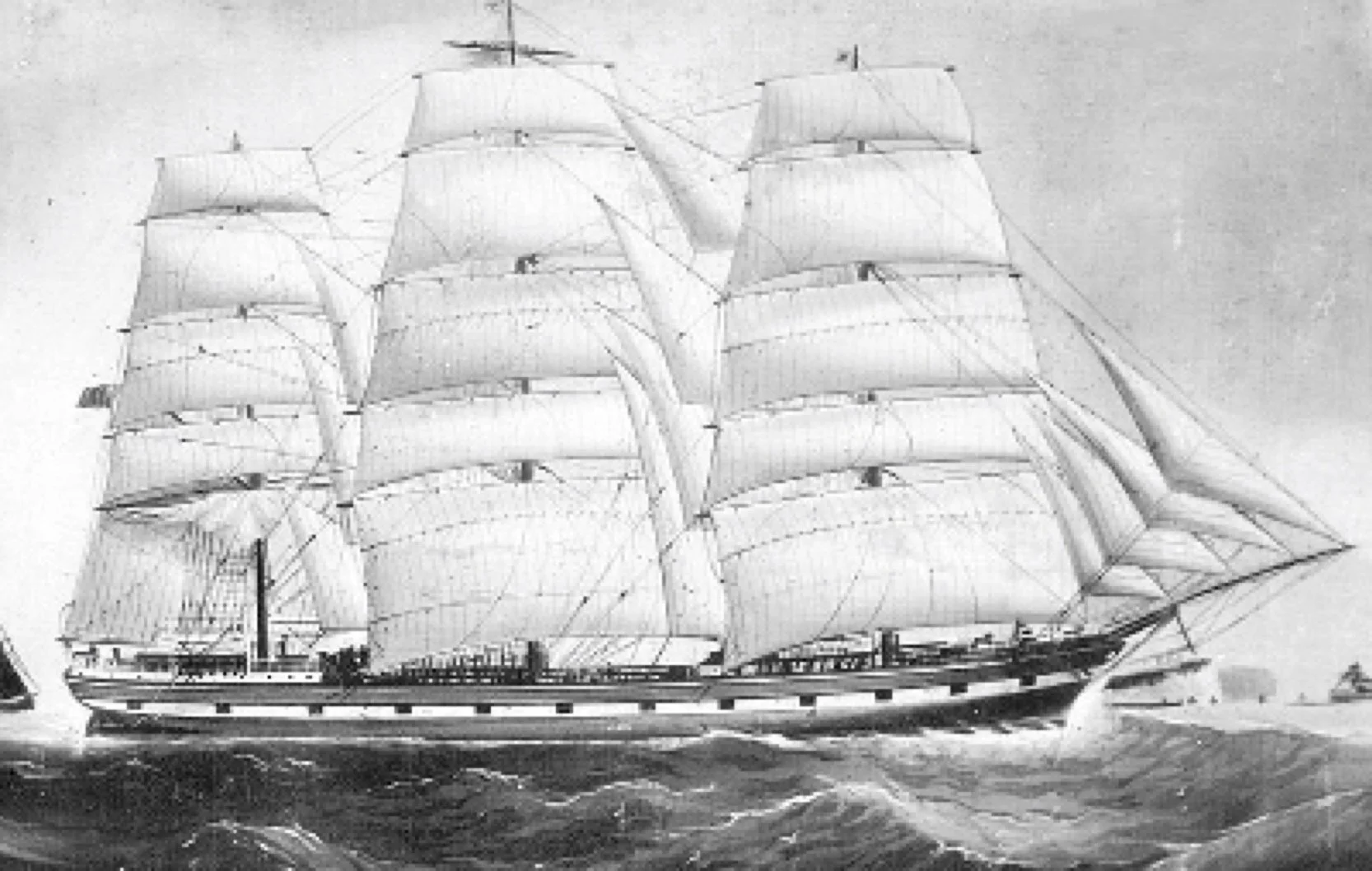
Every ship and immigrant has a story, most ships were grand clippers of the 1860s-1890s. Here is a picture of the clipper Scimitar/Rangitiki quarantined in 1874 for Measles and Scarlet fever (State Library of Victoria).
From the late 19th century, each of New Zealand’s four main port cities had its own quarantine island. These quarantine facilities closed during the 20th century. Locations offering modern quarantine services, known as transitional facilities, are now located on the mainland.
For more information visit the following sites:
NZ Quarantine stations, Te Ara NZ
NZ History of Epidemics, Te Ara NZ
History of Immigration, Te Ara NZ
Click here to go to lists of ships that came to Port Chalmers
Wars and Quarantine
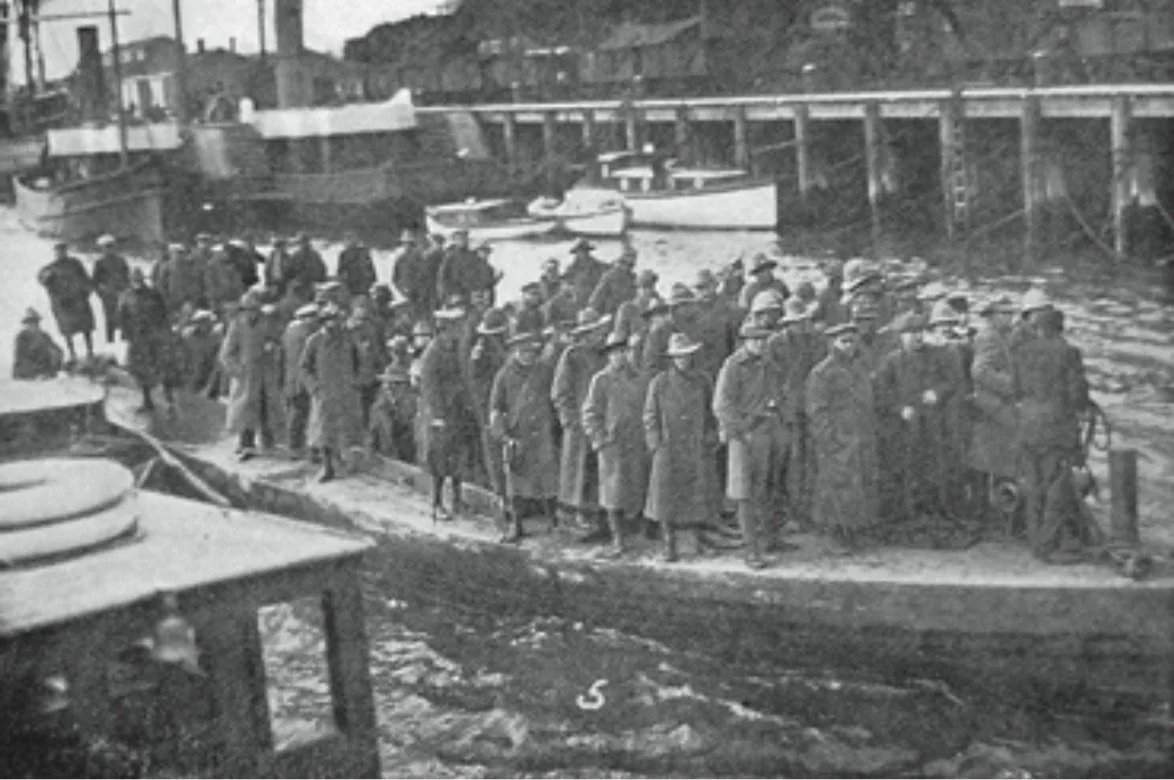
Many buried in the cemetery suffered from VD. During the First World War, Quarantine Island / Kamau Taurua in Otago Harbour was converted into a specialised military hospital to isolate and treat hundreds of soldiers suffering from venereal diseases like gonorrhoea and syphilis.
Between 1916 and 1919, roughly 785 men (both recruits who showed symptoms locally and some returning from overseas) were treated on the island. Patient records show the vast majority of these men were treated for gonorrhoea, with a smaller portion treated for syphilis.
Authorities used the isolated island facility to keep infected soldiers out of the public eye, shielding communities from the heavy social stigma attached to sexually transmitted infections at the time. Life on the island felt punitive for many of the interned men, involving strict military discipline, drills, and restricted movement, though local groups occasionally fundraised to send comforts like tobacco and books.
Not from the Island, but related to it, New Zealand has had many women “firsts”, but one of them was Ettie Rout. She promoted sexual health practices during the First World War in the face of strong public and governmental opposition. Her work was influential in the decision of the New Zealand army to issue free prophylactic kits to soldiers.