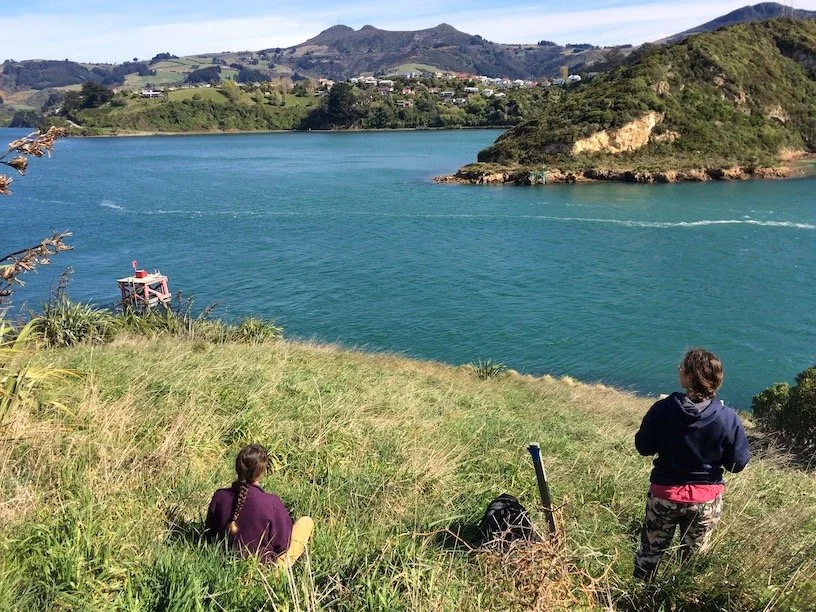
Online Walking Tour
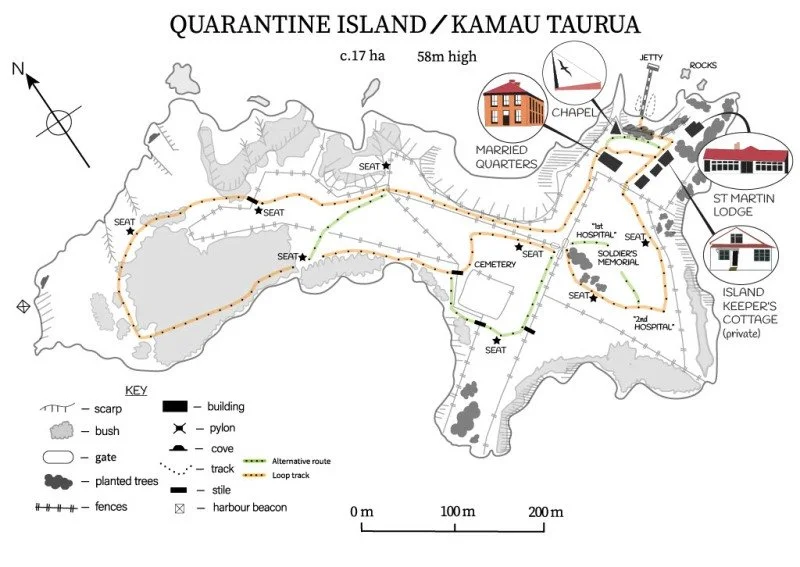
It takes about 40 minutes to do the circuit. Some parts of the bush track are a little rough.
1. Start at the Jetty
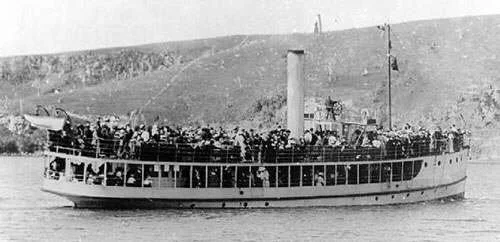
See the remains of two ships. The steel Waikana is a former harbour ferry, proudly built in Dunedin in 1909 and used until the 1930s. It could carry 800 passengers (the Earnslaw was built in 1912 with similar design). The wooden ship is the Oreti. Built in Australia in 1902, it was used to carry timber from Southland to Dunedin, until brought here for wrecking in the 1930s. They are both very fragile and sharp. Please keep off.
2. Carved Gateway
You will pass under a beautifully carved gateway. This was carved by one of the Community members, Pav Pawlowicz, to mark the 50th anniversary of the St Martin Island Community (1958-2008), now renamed. The carving captures many special aspects of Island history and Maori legend.
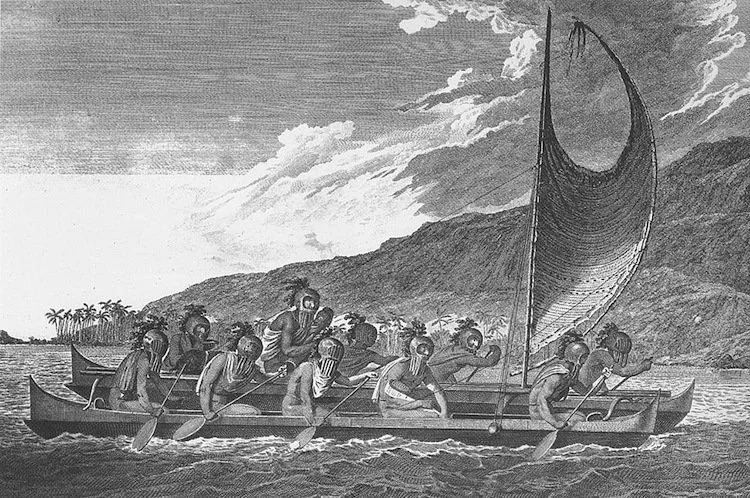
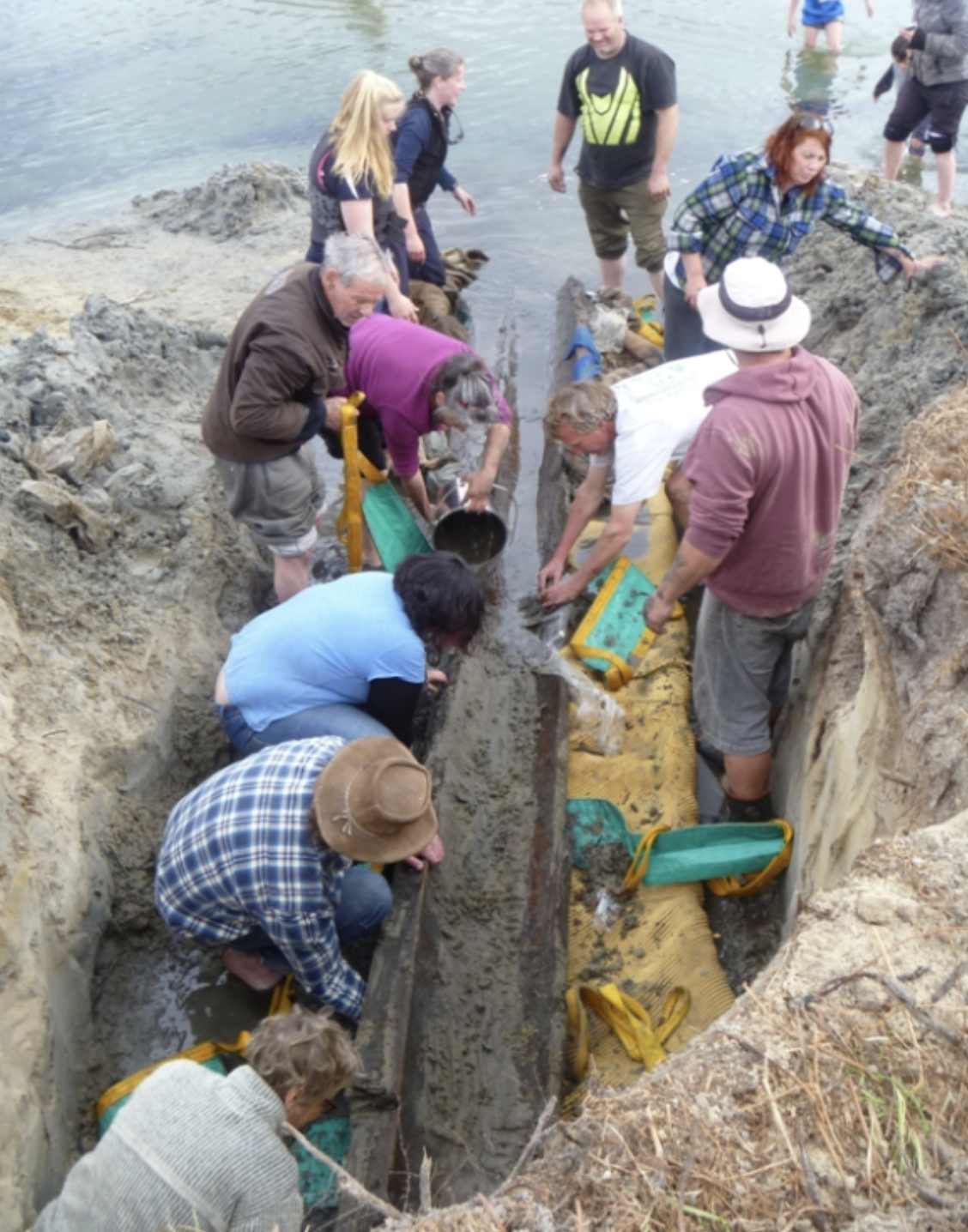
While standing under this gateway, look out to the harbour and imagine the Maori vessels making their way out to the sea. Kamautaurua had a key place on the Otago Harbour. One use of the Island is thought to be to collect seafood. Larger Waka would have come to the Island. These could have been like the one found at Papanui Inlet on the Otago peninsula (dated from ~1500) and is the second oldest discovered in NZ (see photo).
Picture: Engraving ‘Priests travelling across Kealakekua Bay’, by John Webber (1752–1793), artist aboard Cook’s ship.

3. St Martin Lodge (private)
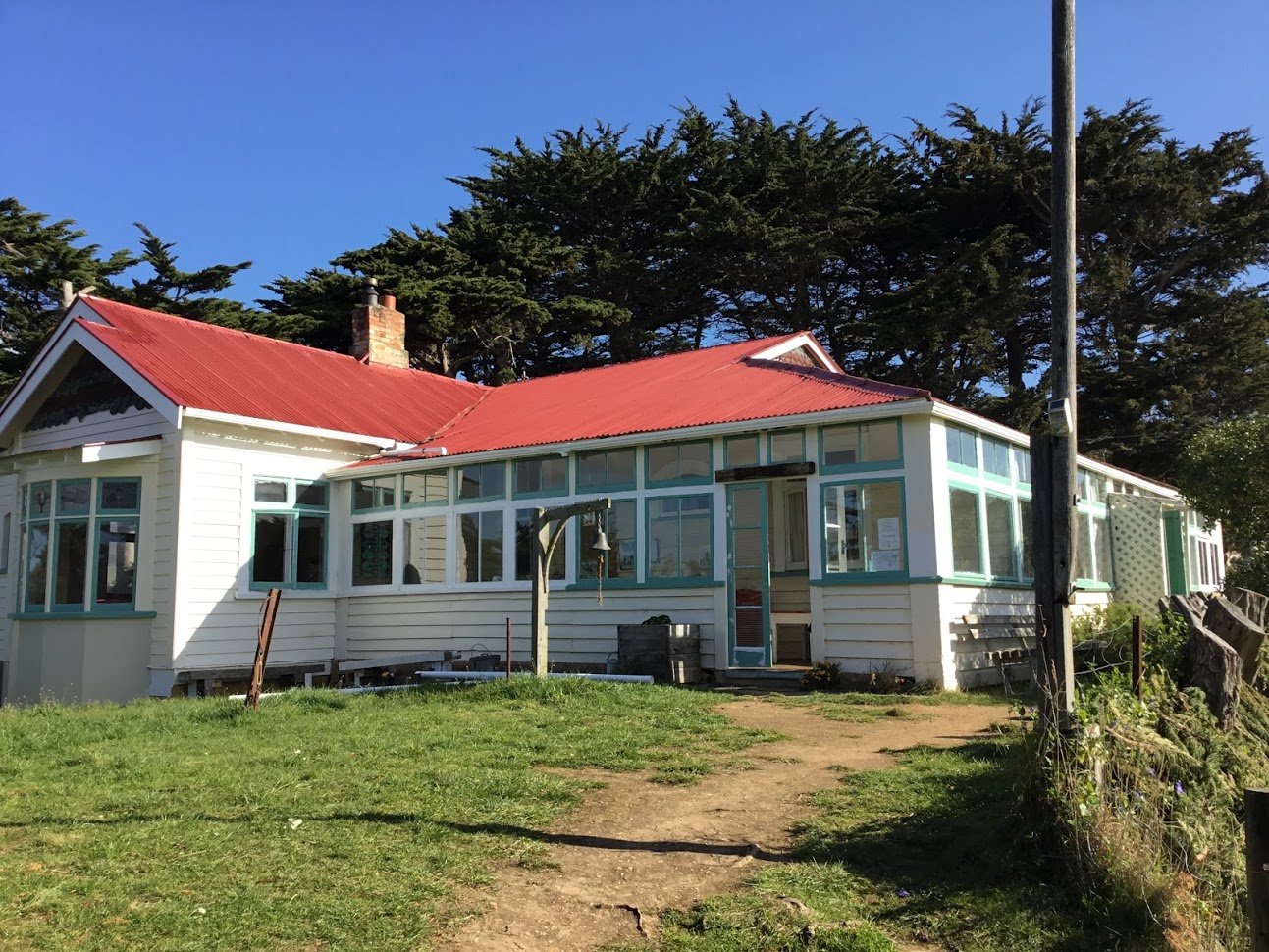
This has been built around the original Keeper’s cottage (1873) in the 1920s. The windows and other parts were from the NZ and South Seas Exhibition (1925-1926). It has basic accommodation for 30 people. The only toilets on the island are accessible from the back of the Lodge.
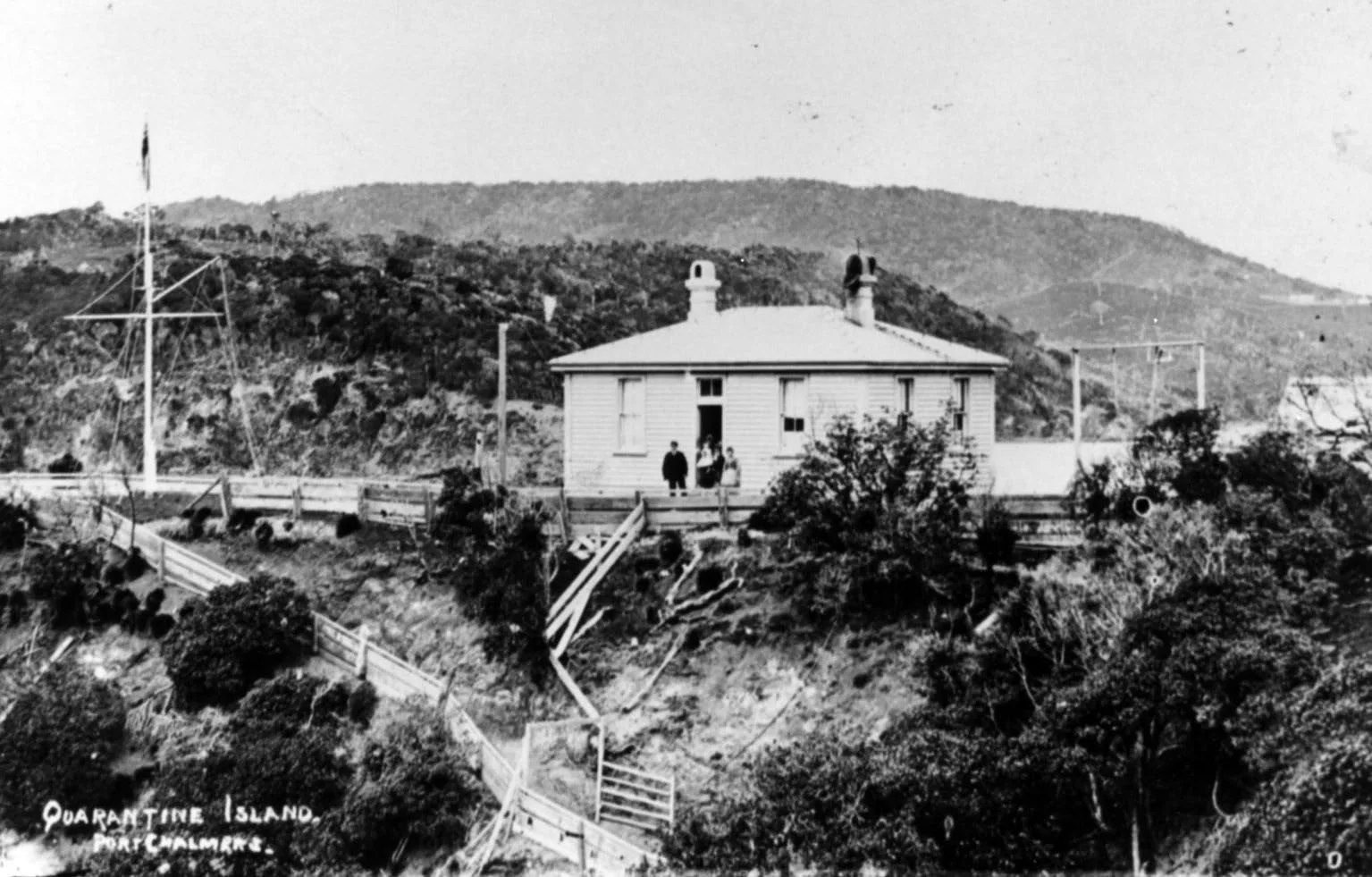
The first part of the house was first built in 1872 for the keeper of quarantine, John Dougall, and his family, who had lived on the Island since 1863. This meant the Keeper’s family then had a house separate from the people in quarantine. Two of their children had died from illness related to Quarantine on the island so the separation was a definite improvement!
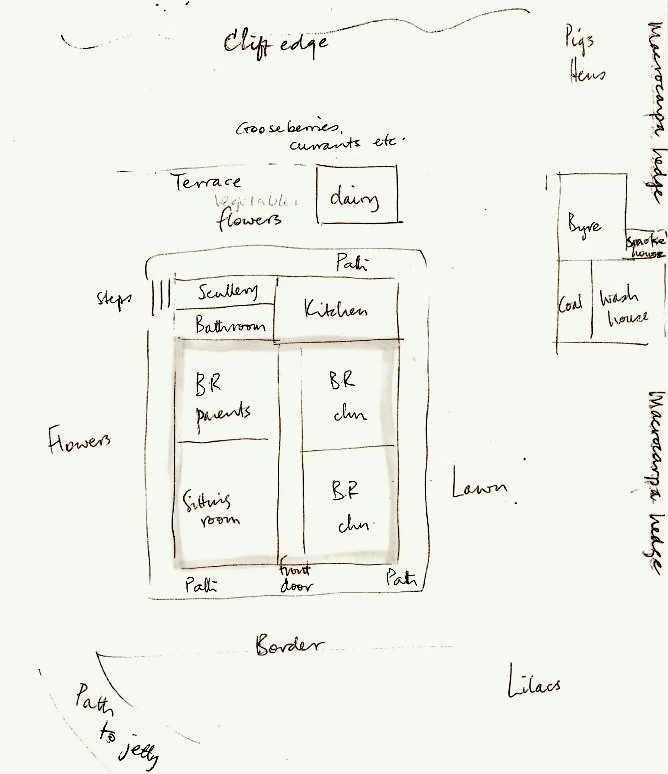
The house was a standard government four-roomed house with a lean-to kitchen, it was similar to the cottage by the Marine Studies Centre across the channel. It forms the middle of today’s Lodge- the two bunkrooms. It was originally lined with painted timber, but in 1883 the ‘Sitting room’ was wallpapered, using newspapers as backing. The newspaper and original newspaper can be seen in one bunkroom, up above the door.
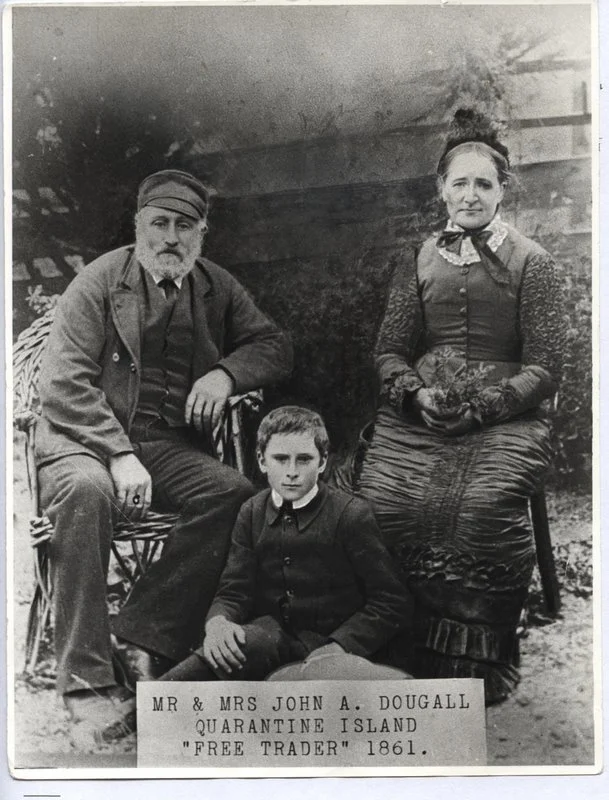
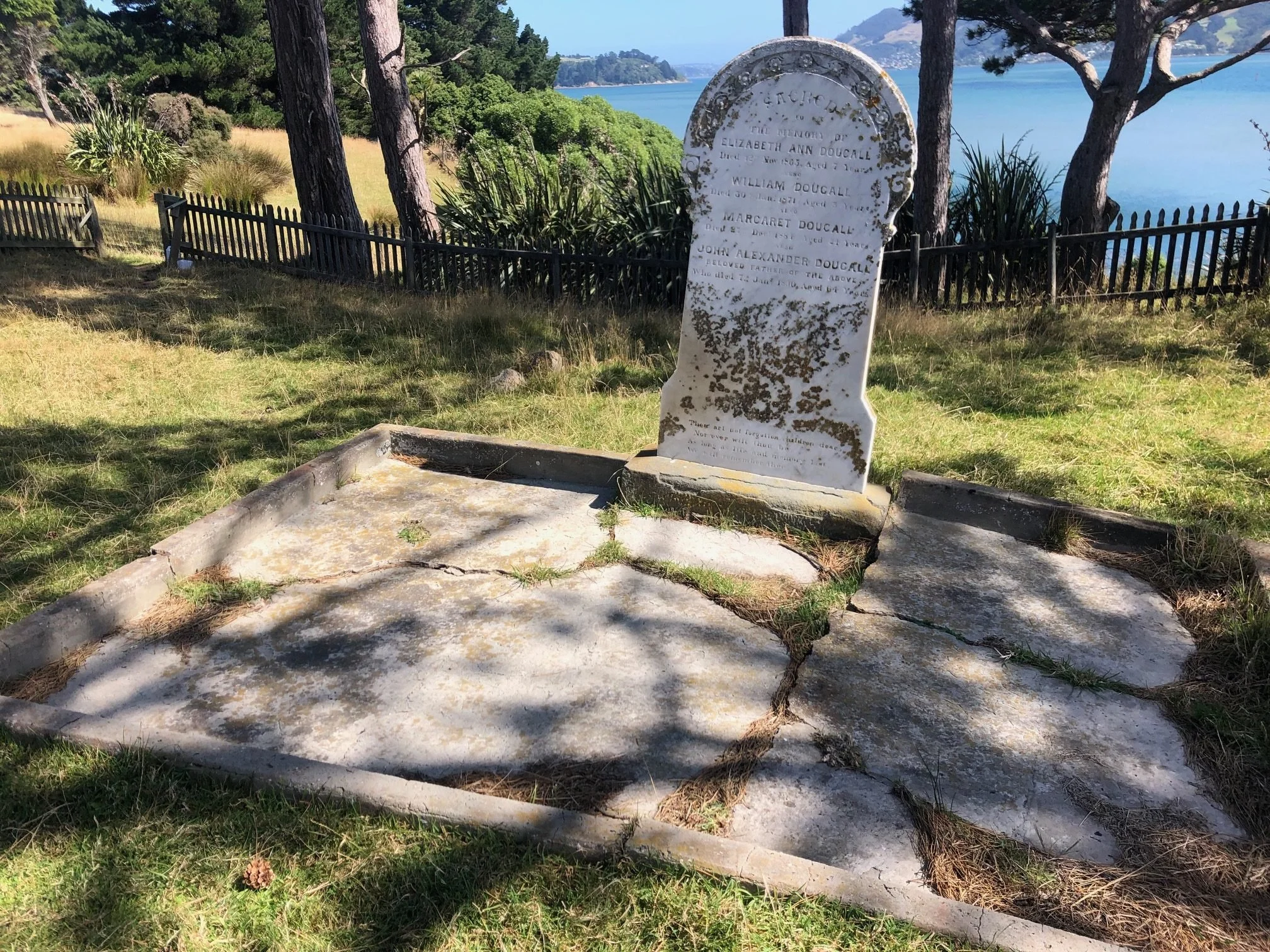
Three generations of the Dougall family lived in this house for 61 years. John was Keeper from 1861. Initially with his young family in an older building, then from 1872 in this house. When he died in 1890, his wife Elizabeth took over, then son Will became keeper. John Dougall and three of his children (died at ages 5, 7, 24) are buried in the Island cemetery.
Will Dougall lived here with his wife Hester and daughters Bell and Madge. The family were moved out for a time when the Island was used by the army as a military hospital during the first world war (1915-1919). Plan of the Cottage (now Lodge) when Bell Dougall was a girl (about 1914).
Below are photos of John and Elizabeth Dougall and son Will, late 1880s (Keepers 1861-1824), and the original Cottage. This is now incorporated into the Lodge.
4. The Cottage (private)
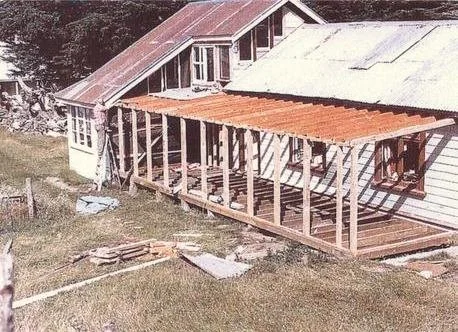
The first part was built in 1916 as a ‘Recreation Hut’ for the staff of the ‘Port Chalmers Military Hospital’ and extended in 1989- 1990. The Island Keeper lives here.
The photo is adding the sunroom, lounge and master bedroom to the WW1 recreation room in 1990.
5. The Woolshed
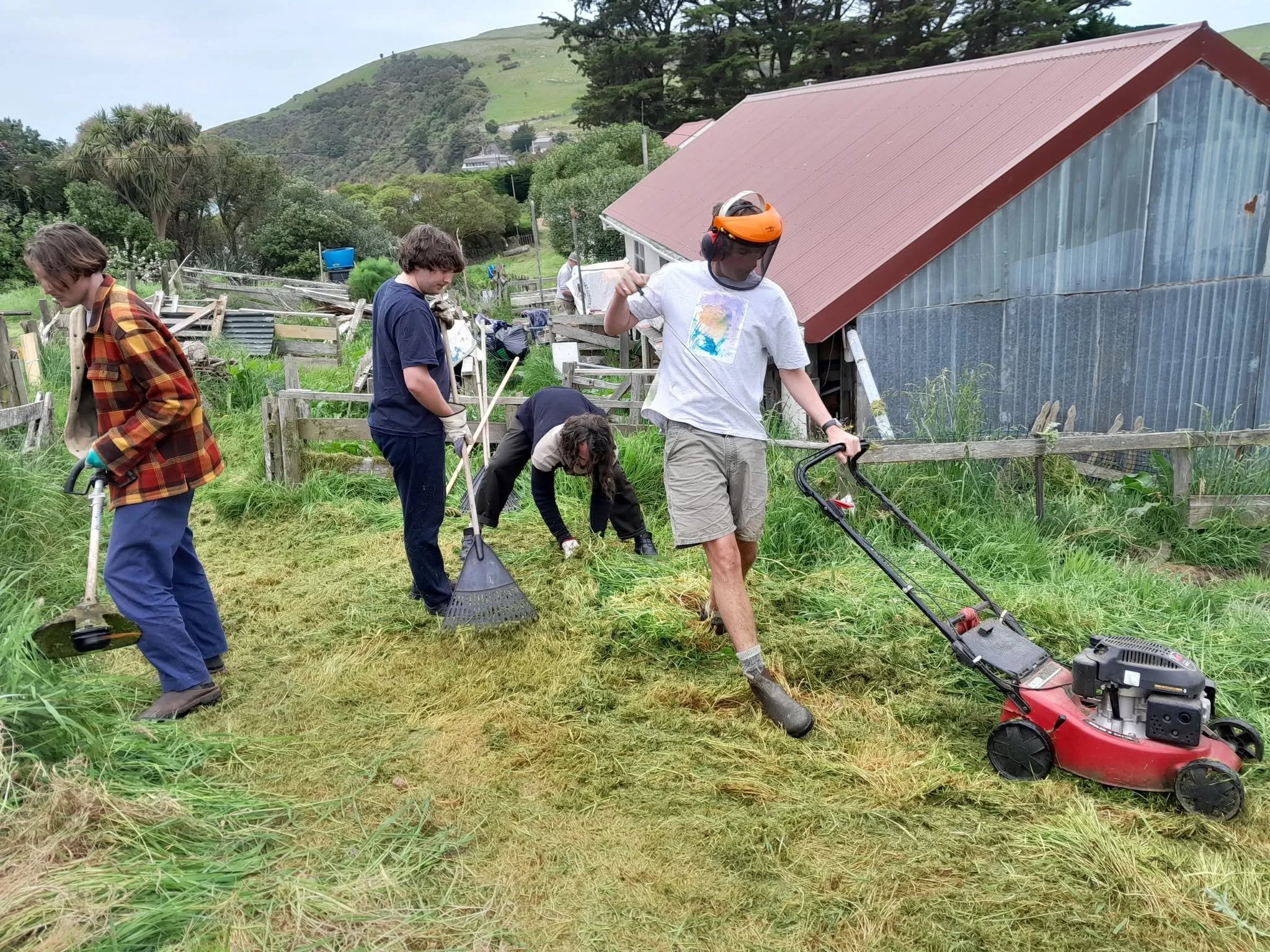
The Woolshed (1916, rebuilt 1975) retains the shape of the ‘Ablutions Hut’ built for the military hospital.
6. The Married Quarters
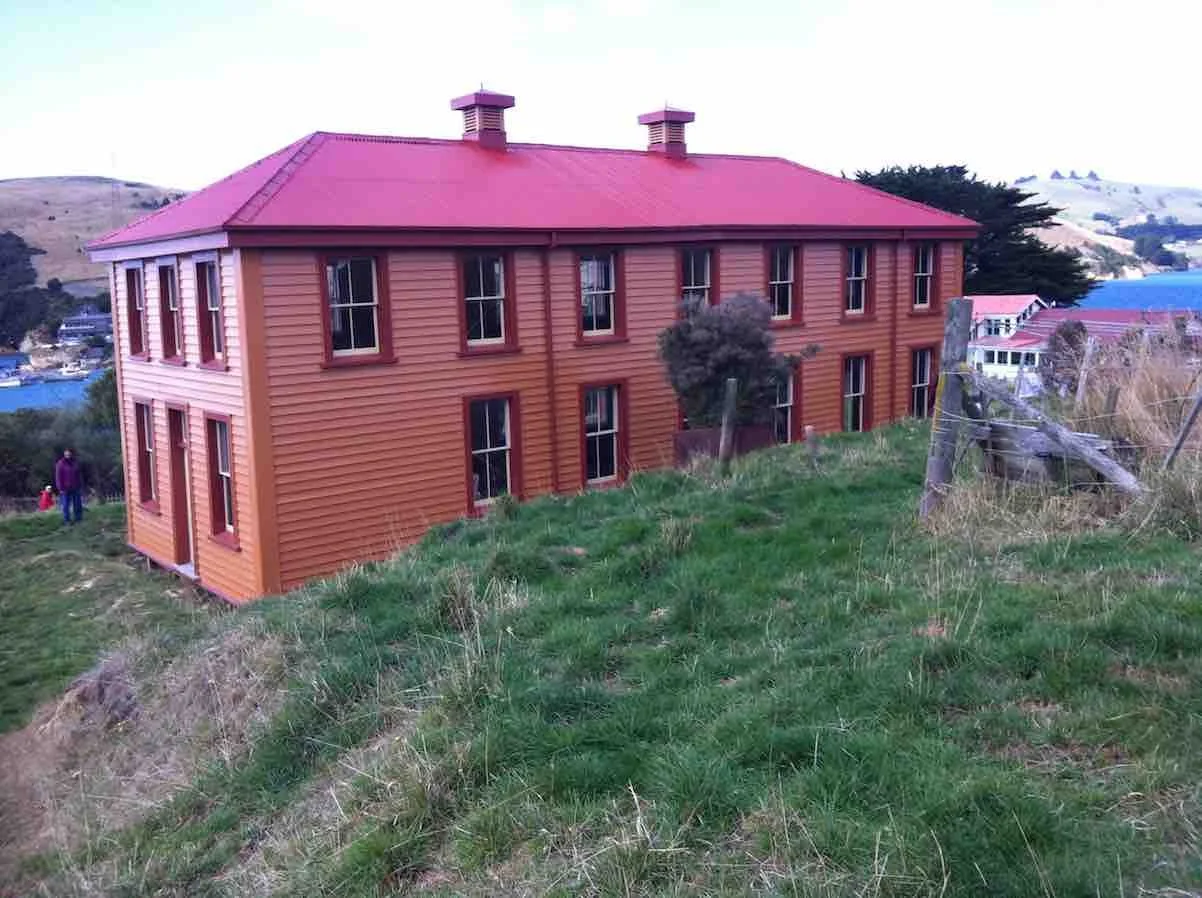
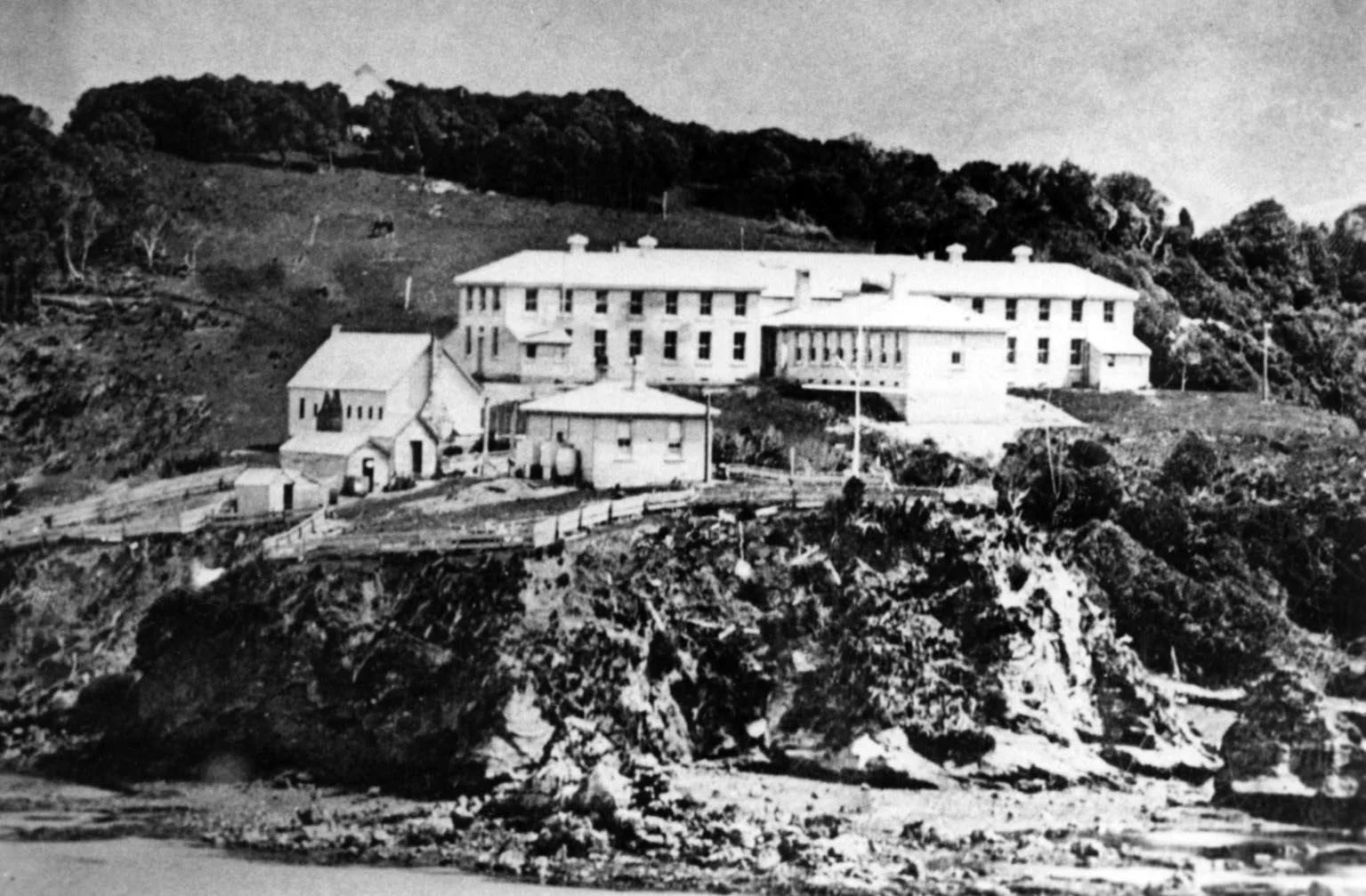
The Married Quarters (1873) is the only two-storied building from quarantine times on its original site, left in NZ. It was part of a much larger complex including single women’s dormitories and a dining room.
You’re welcome to go inside to find out more about the building. From the 1870s, quarantine regulations were introduced in an attempt to prevent travellers bringing infectious diseases into New Zealand. People who were infected, or were suspected of being infected, were housed in quarantine stations until it was clear they were free of disease.
The first Quarantine station was built on the island in 1861 but not used until 1863. It was closed in 1924. There were two main quarantine periods (the 1870s and WW1). The major buildings were completed in 1873.
This building represents an important part of Otago’s and New Zealand’s history and is one of only two 19th century, offshore Quarantine station dormitory buildings remaining in New Zealand.
Here are photos of the Quarantine Station (built 1873) now, and as it looked in about 1900.
7. The Chapel
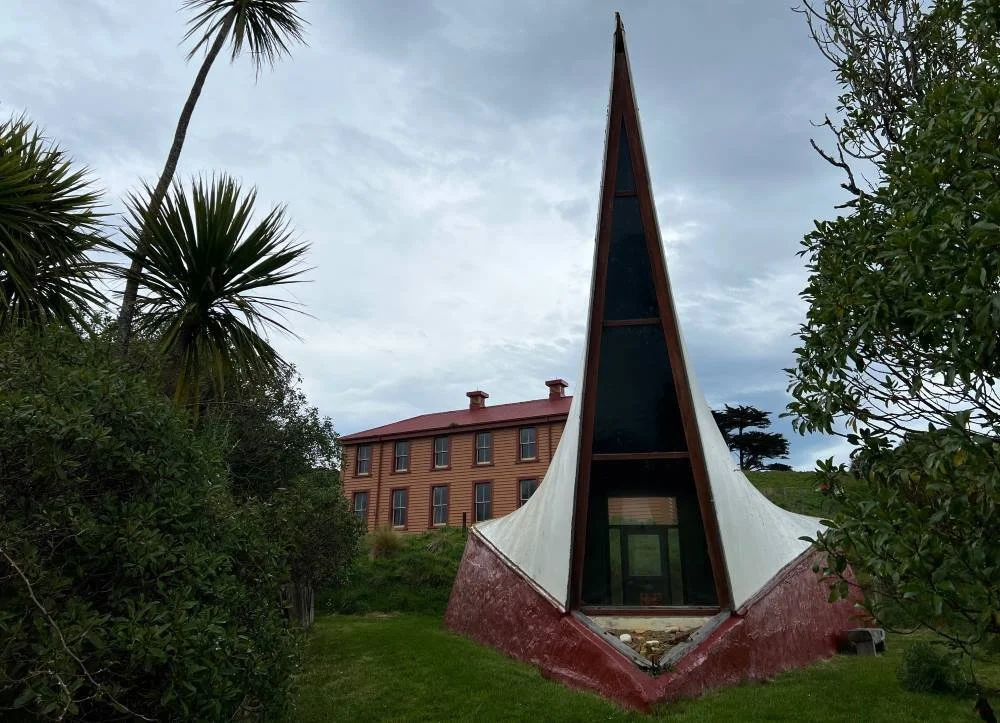
The Chapel (completed 1973). An innovative design by Bob Oakley. It was a major undertaking for the early Community reflecting values of ‘work and worship’. The lower walls are built from rammed earth and benches from timbers recycled from the old jetty.
8. The Hospital Sites
From the Chapel, walk back to the woolshed and pass through the gat. Walk up the farm road. Look out for roosting spoonbills on the way up to the 2nd hospital site.
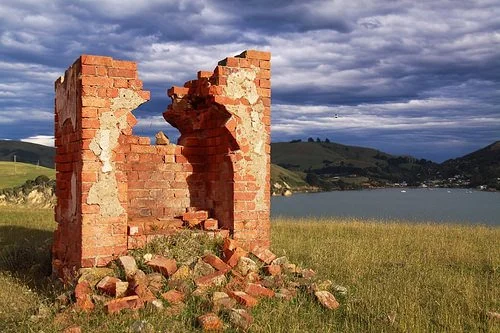
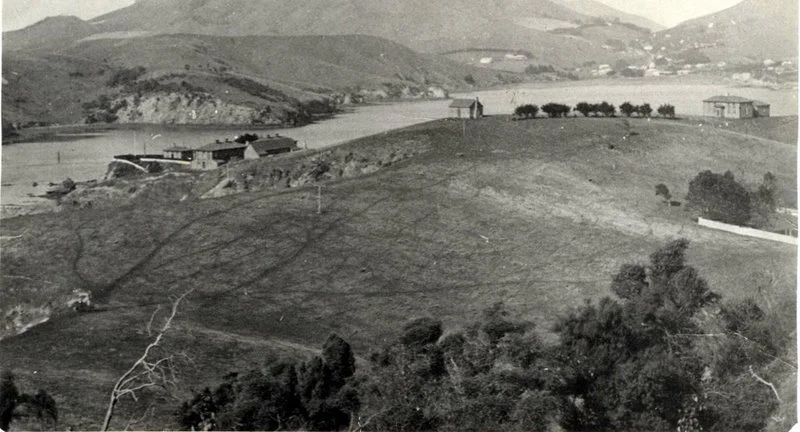
The second and main hospital (1873) was a two-storied building with two 12 bed wards. Look for two brick chimney foundations on the hill. The perimeter is pegged out. The chimney is very fragile now, please keep off.
The second picture is of the main hospital (1873) on the right and first hospital in the middle. Only traces remain of the first hospital (1863). Pegs show the building perimeter.
9. Shot at Dawn Memorial
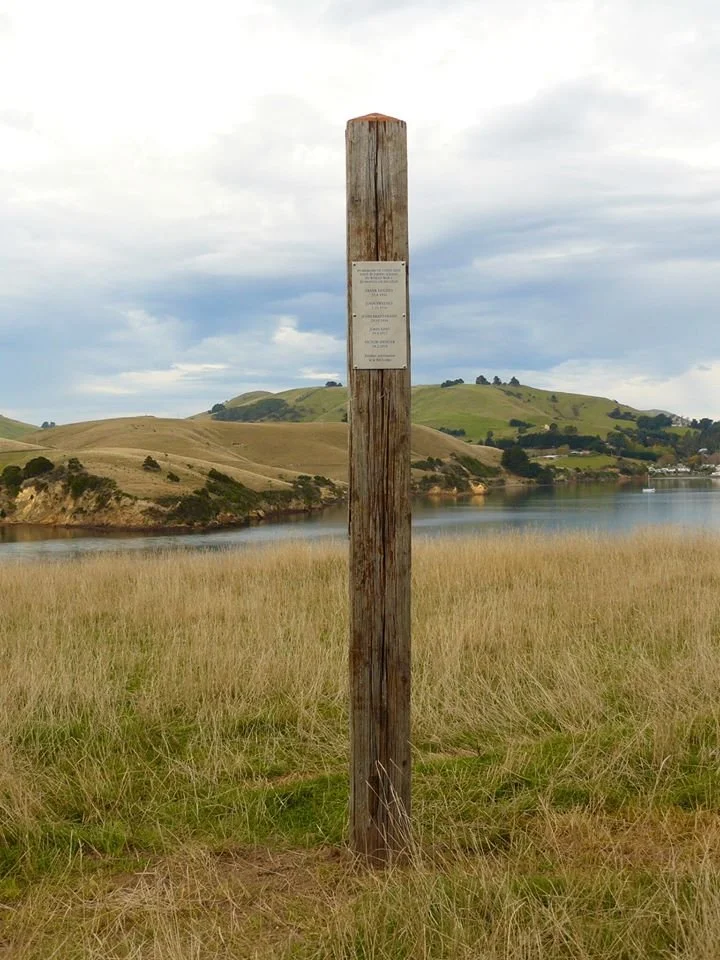
This commemorates the five NZ soldiers executed following courts-martial in France and Belgium during WW1. This simple memorial, erected by the Community, is the first in NZ.
The memorial is on ground levelled by soldiers in WW1 as a parade ground. During the First World War, Quarantine Island / Kamau Taurua in Otago Harbour was converted into a specialised military hospital to isolate and treat hundreds of soldiers suffering from venereal diseases like gonorrhoea and syphilis.
Between 1916 and 1919, roughly 785 men (both recruits who showed symptoms locally and some returning from overseas) were treated on the island. Patient records show the vast majority of these men were treated for gonorrhoea, with a smaller portion treated for syphilis.
Authorities used the isolated island facility to keep infected soldiers out of the public eye, shielding communities from the heavy social stigma attached to sexually transmitted infections at the time. Life on the island felt punitive for many of the interned men, involving strict military discipline, drills, and restricted movement, though local groups occasionally fundraised to send comforts like tobacco and books.
10. The Cemetery
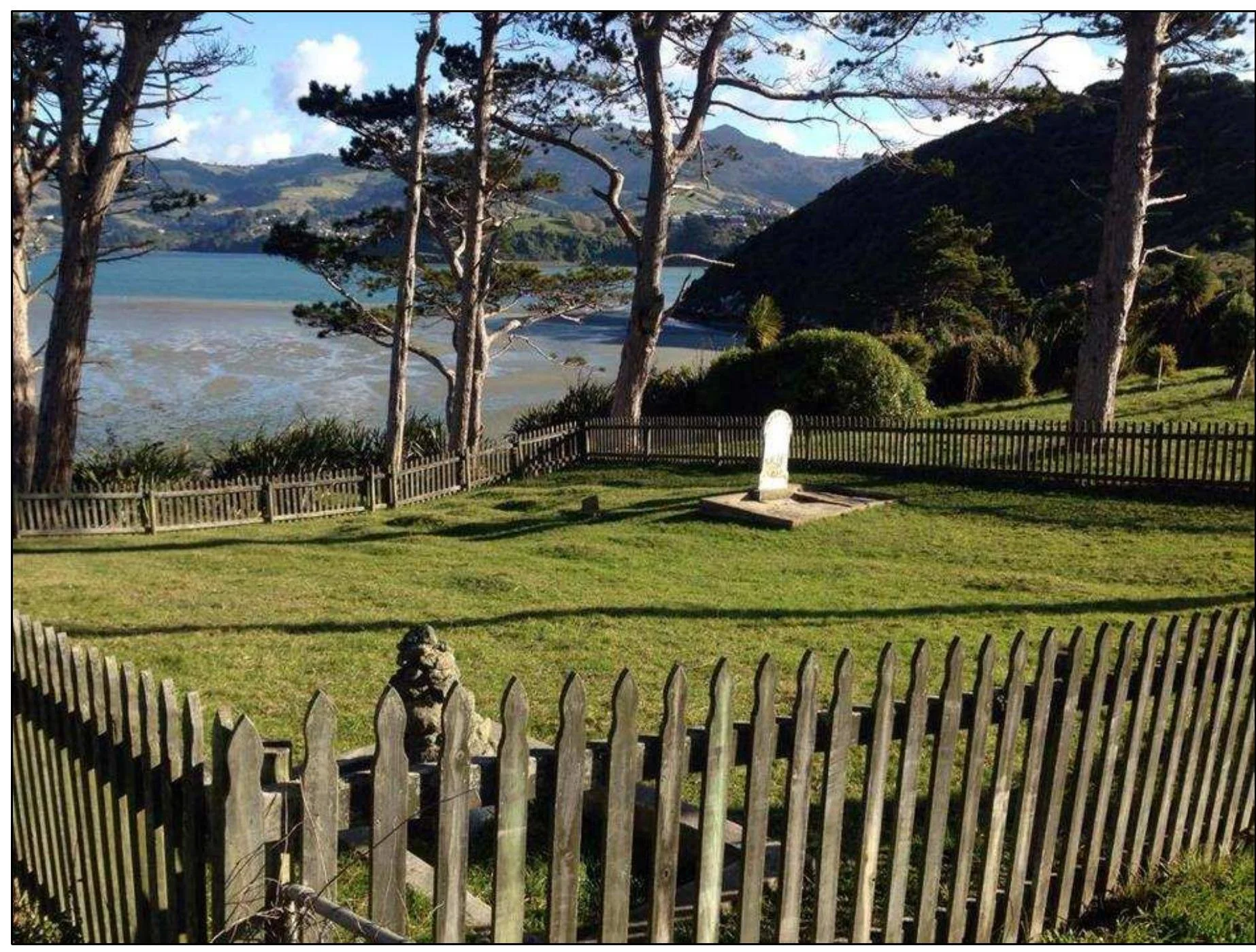
72 people are buried here, consisting of those who died in quarantine, the first Keeper (John Dougall) and some of his family. There is also a memorial to the Rev. Dave Wilson, the Community’s first resident caretaker, who lived here for 10 years.
It was the first ‘home’ in New Zealand for many settlers who arrived during the late 19th century on ships that were quarantined due to illness on board, and is also a tangible reminder of the souls who died while here in quarantine, who are buried on the island. It and other remnants of the Quarantine station can be visited.
A PDF list of burials, ships and causes of death is available here.
In general if there was active disease on board the Otago Medical Officer would be notified by the ships doctor and all quarantined. Sometimes the sick or well stayed on the ship. Epidemics affecting Otago.
Measles among Otago Maori about 1834-1838 with a very high death rate, possibly up to 90% of some settlements.
Scarlet fever (1863-1864, 119 Deaths Dunedin), Typhoid (1874, 120 deaths Cromwell), Measles (1874-75, 344 Deaths NZ), Diptheria (1874-75,481 Deaths NZ), Polio (1925,175 Deaths).
The last quarantined person that died on the island was in 1916 (over 100 years ago of smallpox). No bacterium, virus or bacterial spore could survive until today.
11. Planting and Revegetation
Follow the track through the native bush. The Island had most of its vegetation removed. Most of the native plantings and bush that you see have been planted in the last 40 years by school groups and volunteers. As you walk around the Island you will see where we are making a difference.
Walk along the path, through the bush to views of shag colonies (down below) and Nicol’s passage (shipping channel). If you are lucky you may see a Captain carefully navigating his ship through the narrow passage. Look out for the odd sea lion or two.
The island you see ont he other side of the passage is Goat Island / Rakiriri. It is a 4.5-hectare scenic reserve and is the harbor's second-largest island. During the quarantine era, single men were housed on this island. It is also recognised as a protected historical area.